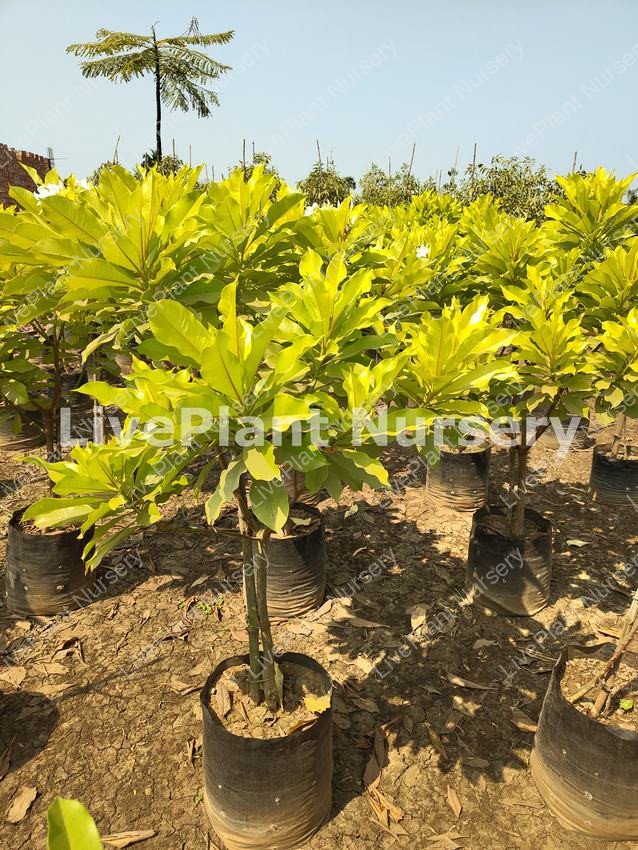
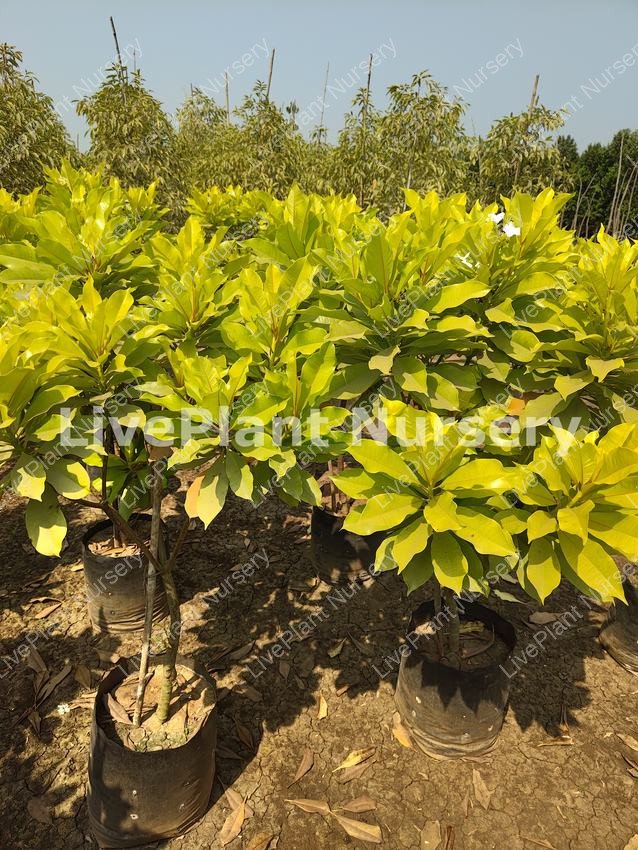
Golden Pong Pong Tree – Cerbera odollam Rubra Plant
The Golden Pong Pong Tree, listed as Cerbera odollam ‘Rubra’, is an ornamental tree valued for its attractive foliage and tropical appearance. It can be considered for spacious gardens and landscape projects where a tree with glossy leaves and a distinctive growth habit is desired.
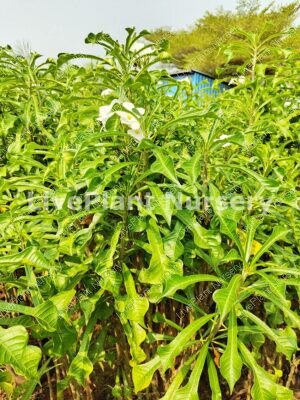
The standard species, Cerbera odollam, is native to parts of South and Southeast Asia and grows naturally in coastal areas, riverbanks and other moist habitats. Its long, glossy green leaves are concentrated near the ends of the branches, giving the tree a dense, leafy appearance. The tree is also known for its fragrant, white, five-petalled flowers with a yellow centre.
Plant Details
- Botanical Name: Cerbera odollam (confirm the ‘Rubra’ identification)
- Common Name: Golden Pong Pong Tree; Pong Pong Tree
- Family: Apocynaceae
- Plant Type: Evergreen to semi-evergreen ornamental tree, depending on conditions
- Sunlight: Full sun to partial shade, depending on the growing environment
- Climate: Tropical and subtropical conditions
- Foliage: Long, glossy green leaves clustered near branch tips
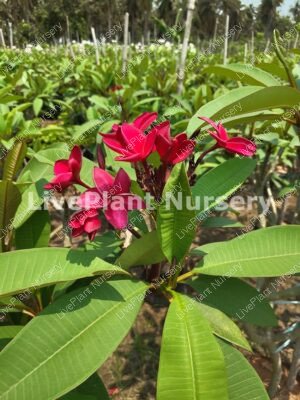
- Flowers: Standard species produces fragrant white flowers with a yellow centre; confirm the characteristics of the ‘Rubra’ plant being sold
- Growth Habit: Upright tree with a rounded, spreading crown as it matures
- Landscape Use: Spacious gardens, suitable outdoor landscapes and selected coastal or tropical planting projects
- Safety: Seeds and fruits are poisonous if ingested
Growing and Care Requirements
Plant the Golden Pong Pong Tree in a location with sufficient sunlight and well-drained soil. The standard species is associated with coastal habitats and moist environments, but newly planted trees still need suitable watering and drainage to establish successfully.
Water regularly while the tree is establishing. Once established, adjust watering according to rainfall, soil moisture and local weather. Avoid keeping the roots continuously waterlogged. A location with enough space for the mature crown is important, as the tree can grow substantially larger than a small ornamental shrub.
Before planting near buildings, paved areas or narrow pathways, consider the tree’s mature size, root growth and the possibility of large fruits falling. Avoid planting it where children or pets may handle or chew the fruit.