Camellia Japonica – Japanese Camellia Plant
Camellia Japonica (Camellia japonica), commonly known as Japanese Camellia, is an evergreen ornamental shrub valued for its glossy, dark-green leaves and large, attractive flowers. Native to parts of China, Japan and Korea, it is widely grown as a decorative plant in gardens where its preferred growing conditions can be provided.
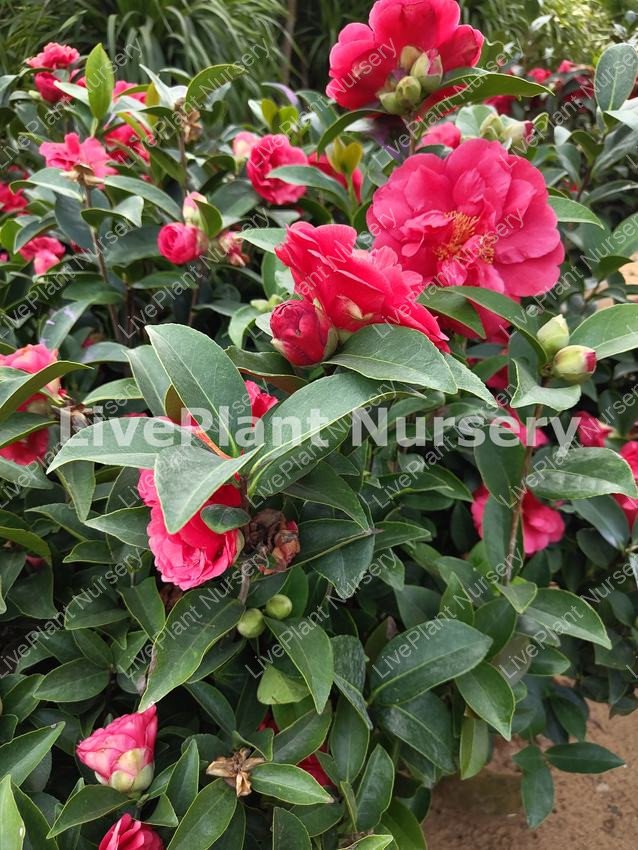
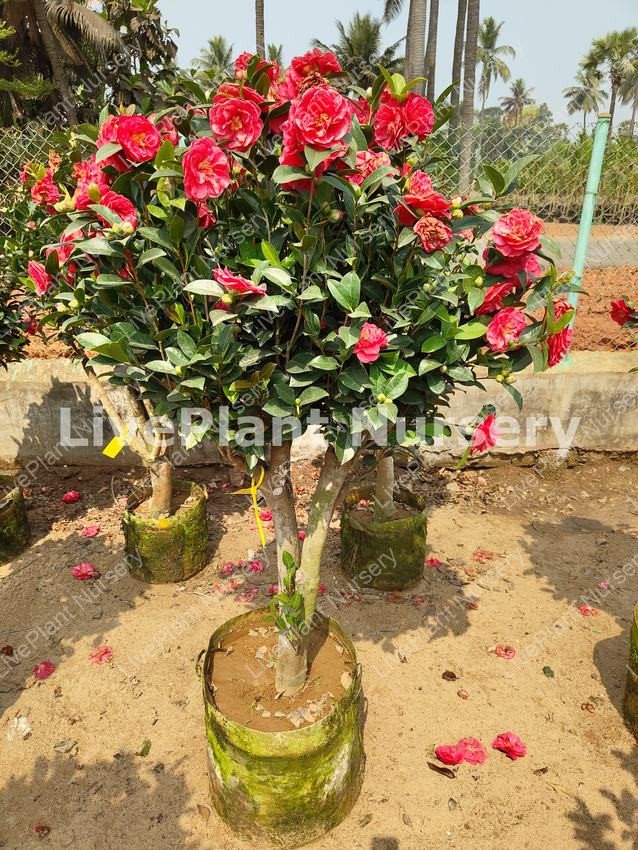
One of its main attractions is its flower display. Depending on the variety, the flowers may be red, pink, white or a combination of colours. Some varieties produce simple flowers with a visible centre, while others have layered petals that resemble roses or peonies. Flowering generally occurs during the cooler part of the year or in spring, depending on the variety and local climate.
Plant Details
- Botanical Name: Camellia japonica
- Common Name: Japanese Camellia, Common Camellia
- Family: Theaceae
- Plant Type: Evergreen flowering shrub or small tree
- Sunlight: Partial shade; protect from harsh afternoon sunlight
- Climate: Best suited to mild, humid or temperate conditions with protection from excessive heat
- Foliage: Glossy, dark-green, leathery leaves
- Flowers: Large flowers in red, pink, white or mixed colours, depending on the variety
- Growth Habit: Dense, upright to spreading, slow-growing shrub
- Landscape Use: Garden borders, shaded gardens, specimen planting and suitable containers
Growing and Care Requirements
Camellia Japonica needs more attention to sunlight and soil than many common outdoor ornamental plants. Choose a location with partial shade and protection from strong afternoon sunlight. In hot Indian climates, particularly in hotter inland locations, growing it successfully can be challenging without a cool, sheltered position and careful watering.
Use a well-drained growing medium rich in organic matter and slightly acidic in nature. Avoid highly alkaline soil, as it can interfere with the plant’s ability to absorb nutrients. Container growing may make it easier to manage the soil conditions.